Aptamers: an innovative therapeutic approach to septic coagulopathy.

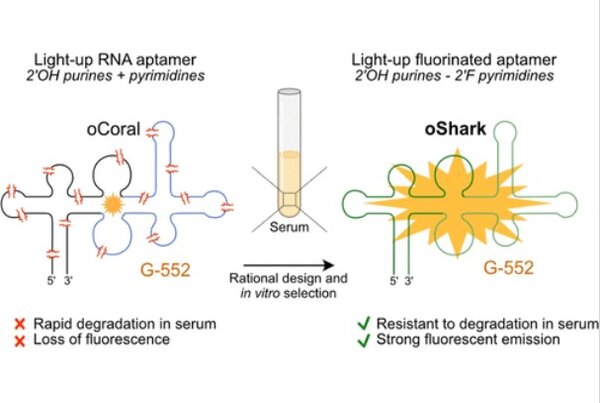
Maeva Martin, first author—under the supervision of Laurence Choulier - and co-directed by Julie Helms -  along with Marine Tschirhart, Cyril Auger, and Florence Toti from the  UMR 1260 Regenerative Nanomedicine unit (University of Strasbourg/Inserm), present a new review published in Annals of Intensive Care (Elsevier). This review highlights the…

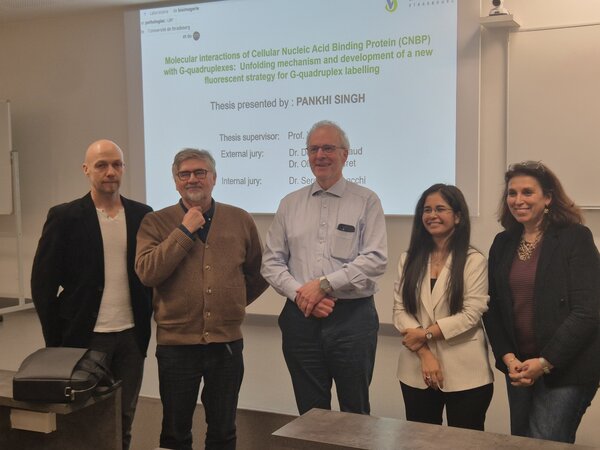
Congratulations to Pankhi Singh!

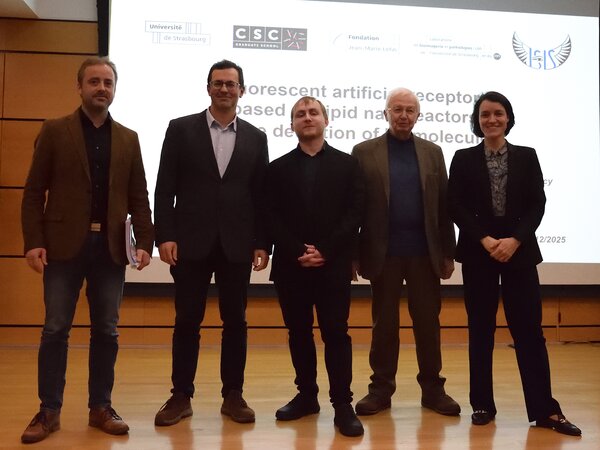
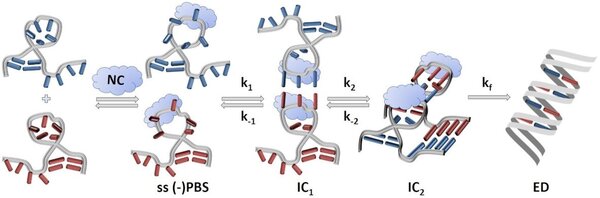
We would like to extend our warmest congratulations to  Pankhi Singh, who defended her thesis under the supervision of Prof. Yves Mély in the Biophotonics of Molecular and Cellular Interactions team. Her work focused on the study of G-quadruplexes, remarkable nucleic acid structures, and their interactions with proteins. This project, at the…

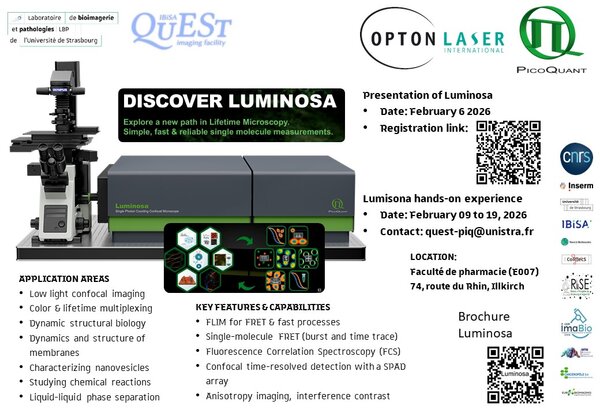
Discover Luminosa: a revolution in lifetime microscopy!

The PIQ-QuESt platform in collaboration with PicoQuant and OPTON LASER internationalinvites you to discover Luminosa, an innovative confocal microscope dedicated to simple, fast, and reliable measurements of single molecules. You will be able to •   Explore the latest advances in low-light confocal imaging and color/lifetime multiplexing. Discov…

Smart nanofibers for better wound healing monitoring

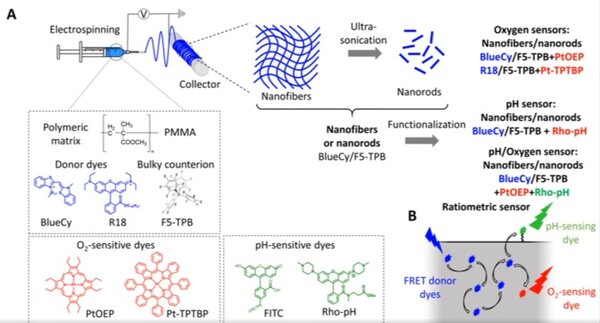
Rémi Pelletier, Anila Hoskere Ashoka and Andrey Klymchenko, de l'équipe Matériaux photoactifs et bioimagerie, from the Photoactive Materials and Bioimaging team, have developed fluorescent polymer nanofibers that act as multiplexed ratiometric sensors for pH and oxygen, two key parameters in the wound healing process. These sensors are based on …

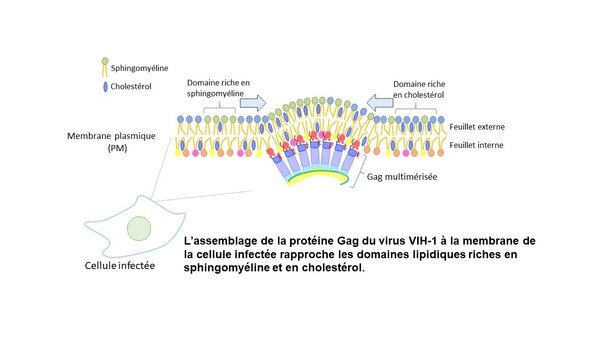
New publication : How HIV-1 Gag protein selects host membrane lipids.

We are pleased to announce the publication of a study conducted by Nario TOMISHIGE, Yves MELY, and Toshihide KOBAYASHI on how the HIV-1 Gag protein reorganizes lipids in the host plasma membrane. HIV-1 is enveloped in a membrane derived from the host cell, which is notably enriched in specific lipids such as sphingomyelin (SM) and cholesterol…

The Laboratory of Bioimaging and Pathology

The aim of the Laboratory of Bioimaging and Pathology is to use multidisciplinary (biology/chemistry/physics) and multi-scale (from molecule to patient) approaches to study, at both fundamental and applied levels, the properties and roles of a limited number of key biomolecules involved in various pathological processes. Our approach is to develop new therapeutic and diagnostic approaches in oncology and microbiology based on information obtained at the fundamental level. A key feature of the unit is the parallel development and characterisation of innovative fluorescence-based tools, methods and techniques to answer these questions. This multidisciplinary approach, which combines the development of innovative fluorescence and imaging tools to address biological questions, is unique in the French scientific landscape.

Lire la suite
News

Publications